
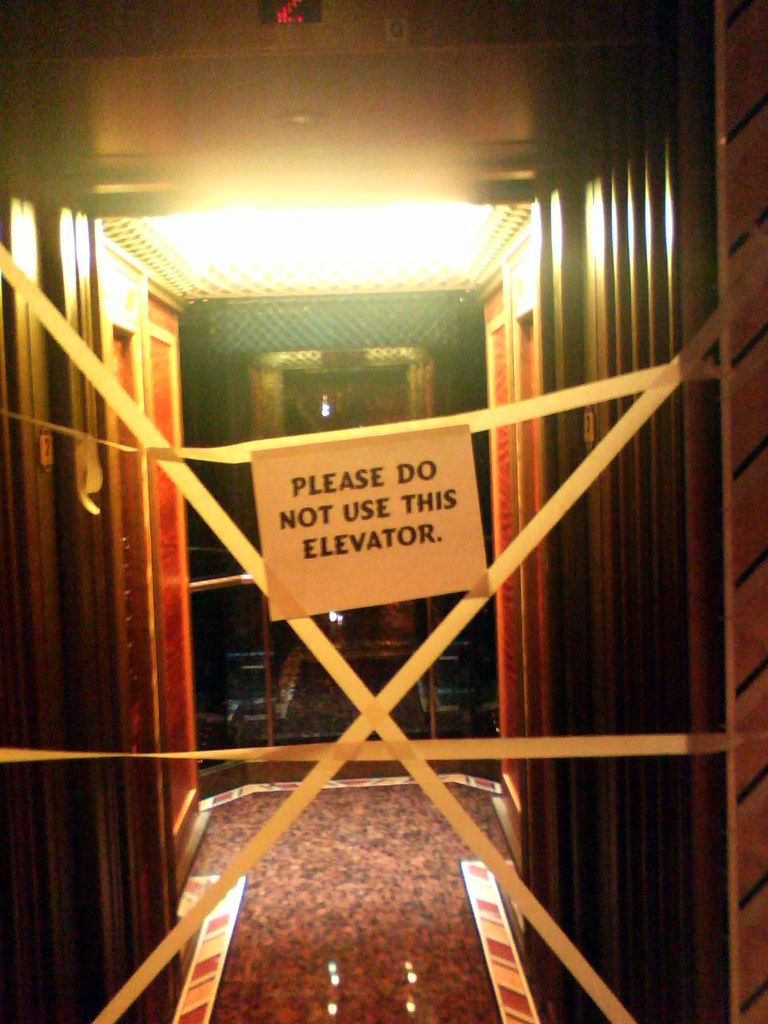
You can sue for injuries due to a faulty elevator. However, successful recovery will depend on a number of factors. There are many different situations in which an elevator can be shown to be unsafe or faulty.
Such situations include: (1) an elevator that is misleveled and does not directly line up with an adjacent floor, creating a significant tripping hazard; (2) An elevator that stops too quickly or rises/drops too suddenly; and (3) a malfunctioning door that closes too quickly, or continues to close when someone is in the process of entering or exiting the elevator.
In order to successfully recover compensation due to an elevator caused injury, the legally responsible parties must be identified and named in the lawsuit. The party that is responsible for an elevator-related injury can differ. Foremost, the subject property owner is under a duty to keep their property, including elevators, safe for appropriate usage and can be held responsible. At times, property owners will cede maintenance and inspections to a separate elevator maintenance company. In such a situation, the elevator maintenance company might be held responsible as well. As well, although less common, the elevator manufacturer can be held liable, if it can be proven that there was a mistake in the elevator’s design, or a defect in the elevator’s construction. Proving one of the above parties is liable will require gathering the proper evidence.
Necessary evidence to be acquired in the case of an elevator-related injury, includes maintenance/repair logs, recorded elevator-related complaints, maintenance contracts, and video footage, provided that there is a camera. It is often necessary to retain an elevator expert to help prove one’s case.
For a claim to be successful, it must be shown that either: (1) the responsible party had notice of the problem (actual notice); (2) should have known about the problem (constructive notice); (3) created the problem; or (4) the theory of Res Ipsa Loquitur can be applied.
Res Ipsa Loquitur can be applied when: (1) The event is of a kind that does not ordinarily occur in the absence of someone’s negligence; (2) the “instrumentality” (e.g. the elevator mechanism that caused the injury) was under the defendant’s sole and exclusive control, and; (3) the injury was not caused by any voluntary action or contribution by the injured party.
Further, it is important to keep in mind the deadlines for filing an elevator-related personal injury lawsuit. In New York, you normally have three years to commence a lawsuit resulting from an elevator defect. However, if the elevator is operated/maintained/owned by a city, municipality, school district, or a city or state “Authority (such as a Transit Authority or Housing Authority), you will only have ninety days to file a Notice of Claim, and one year and ninety days to commence a lawsuit.